Monday, January 3, 2011

Chass on Bill Lajoie

Crusty Murray Chass has been oft-criticized for his anti-statistical analysis stance and “I’m not a blogger” platform, but what Chass does best is tell stories about some of the legends of the game. Chass has been around this game for a very, very long time and that’s afforded him a great perspective on some of the characters in baseball history. So while I vehemently disagree with his “get off my damn lawn” attitude towards guys like me, I am always happy to read something like this, where I learn a little bit about a player from baseball history who I knew little about prior:

For [Fred] Lynn to be eligible to play in the post-season should the Tigers make it, he had to be in Detroit by midnight that night. The Players Association later challenged the rule, but in the end the matter became moot because the Tigers finished a game behind the Red Sox.

But in the immediate aftermath of the trade, when the Tigers were still in first place, Lajoie had a decision to make. He knew that Lynn technically had not arrived in Chicago on his chartered jet from Anaheim, where the Orioles were playing, by midnight. He knew that the plane had not entered Chicago air space until 10 minutes after midnight.

Lajoie could have said that Lynn had beaten the deadline and, an official in the commissioner’s office said, the office would have accepted his word. But Lajoie chose to be honest.

He didn’t get there,” Lajoie admitted the next day. “They were over the city limits about 10 after 12.” Asked why he didn’t fudge the time, Lajoie said, “I just felt a rule’s a rule. There’s no sense playing with it. That’s the rule and we’ll live by it.”

Good story about a man, Bill Lajoie, who I knew very little about. Nice work, Murray. Thanks for sharing that with us.

This entry passed through the Full-Text RSS service — if this is your content and you're reading it on someone else's site, please read our FAQ page at fivefilters.org/content-only/faq.php
Five Filters featured site: So, Why is Wikileaks a Good Thing Again?.


View the original article here

Thoughts For The New Year

?Did you ever wonder why the word ‘play’ is used to describe practicing an instrument? As a child after coming home from school and finishing my snack, I would tell my mother that I was going to ‘play the piano’. I would then sit down at the piano often practicing scales for a good half hour until I felt that I had given my fingers and brain a good work out before even beginning to play music. So what was it that I was doing all those years and continue to do on my cello today? Working or playing?

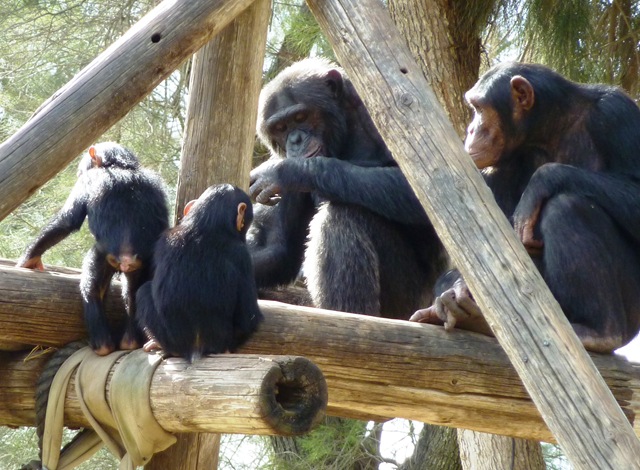
4 chimpanzees on arbor-croppedWe tend to think of play as the domain of children and animals. Of course that’s not true!? As I discuss in my book ?Digging Deep: Unearthing Your Creative Roots Through Garden?”Play is creativity at work. It is an attitude, a spirit, a point of view, and, most of all, a way of living a life. It is a commitment to finding true joy in any act, with little or no concern about the outcome. In its purest, most unadulterated form, play is the expression of who we are when we can let go of who we are trying to be.”

So, how about if we gardeners coin the phrase ‘I’m going to play in the garden’ rather than ‘I’m going to work in the garden’ this coming year?? I don’t know about you but after a great day of gardening when I have to push myself to put the tools away and close up shop, I’m happy and content, having had a grimy, sweaty, fun-filled day.

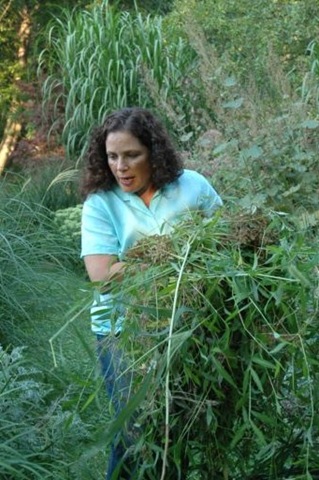
fran with weeds

As far as what’s on deck?at GGW as we begin 2011..

We are EXTREMELY excited about the following:

Dalfsen 067

?Tovah Martin and Noel Kingsbury have joined our roster of Contributors. If I started writing about all of their accomplishments; the books that each has authored, their multiple areas of expertise, and the inspiration that they bring to the gardening world, I’d be at the computer for a long time. Suffice it to say that you’ll be hearing alot more about and from them on GGW in the coming months.

?David Perry,?a rare jewel in the gardening world,?is returning to?judge January’s Picture This.?His?topic? is Macro In A Mason Jar.?As always, David is offering a thought provoking, compelling and?out of the ordinary challenge.

As I finish another year at the helm of Gardening Gone Wild, I want to thank my colleagues at GGW. I’m in awe of how Nan, Saxon and Debra continue to write such inspirational, informational, thoughtful and often times fun pieces.?

P1020410 My partnership with Nan, as a co-creator and manager of GGW, has been a wonderful one; filled with creative problem solving, fun, laughter, and many times just hard work…ooops…I mean play. This coming year, Nan will be focusing on her own blog Hayefield and will no longer be a Regular Contributor (or my co-manager) at GGW. I certainly plan on grabbing her to make a Guest Appearance from time to time on GGW.

And finally, a big thank you to all of you for reading, commenting on and participating in Gardening Gone Wild. Wishing you a magnificent 2011; one filled with health, beauty, laughter, meaning….and play.

This entry passed through the Full-Text RSS service — if this is your content and you're reading it on someone else's site, please read our FAQ page at fivefilters.org/content-only/faq.php
Five Filters featured site: So, Why is Wikileaks a Good Thing Again?.


View the original article here

Are the Yankees Losing Plate Discipline?

Seven of the eight regular position players saw their O-Swing% increase by over 4%, and Brett Gardner, who made an obvious attempt to draw more walks, increased his by exactly 1%. This obviously isn’t good as more swings at pitches out of the zone leads to softer contact, if any at all, and more outs. It’s also troubling for the older players because it could be a sign of decline—as players age and lose bat speed, they start their swings earlier to catch up to hard fastballs, making it more difficult to stay back on breaking balls and pitches out of the zone. Aging doesn’t seem to tell the whole story, however, as this seems to be a team-wide problem, which indicates that the hitting philosophy has changed.

But I’m not sure that’s it, either. Kevin Long has been the hitting coach since 2007, and it seems unlikely that he would switch his philosophy now. If being more aggressive was his philosophy, you would imagine that the Yankees would have seen an increase before this past season, but as you can see, it just happened this past season. Granted, perhaps it has taken this long for the players to buy into his philosophy, but I doubt it. So I decided to look at their overall Swing% (the percentage of times they swing at any pitch; table is below), and there was not a corresponding increase in the number of swings they were taking (if he wants them to be more aggressive, then everyone should swing more). In fact, the only major change is Nick Swisher, but his new approach has been widely examined. We knew he would swing at more pitches, but everyone seems to be swinging at the same rate as always (Gardner is another exception, but his patience has been addressed as well, though he shouldn’t be more patient if the team philosophy is to be more aggressive).

Let’s look at this a different way. Why would you be more aggressive? One, you don’t want to strike out so much, and two, you want your guys to hit. Therefore, we should see a drop in walks (because they’re swinging at pitches out of the zone) and strikeouts (because that’s the whole idea). I looked at the same players’ BB and K rates (table below), and that isn’t happening. Their total team BB rates are essentially the same, and they are actually striking out more often. So either the philosophy isn’t working out, or something else is going on.

After all this, what do we have? The Yankees are swinging at more pitches out of the zone, but they aren’t swinging any more than normal, aren’t walking anymore, and are striking out a bit more. One explanation is that the Yankees hitters have simply lost track of the strike zone. They are expanding their zone and limiting their swings at a similar rate within the zone (to have a similar Swing%, something has to work against the increase in O-Swing%–in this case, Z-Swing% or percentage of times a player swings at a pitch within the strike zone), which is happening as the Z-Swing% decreased 1% from 2009 to 2010 (the percentage decrease is smaller because there are more pitches in the zone). If the reason was a team philosophy or the results of aging, we would expect all swings to go up, but again, that isn’t happening. So, WTF?

Finally, I looked at the plate discipline statistics for every team in 2009 and 2010, and it all finally made sense. You’ll be happy to know that the Yankees have had the best plate discipline (lowest O-Swing%) of any team in baseball for at least two years running, which doesn’t surprise those who lament the 3-hour, 8-minute games (that seems low). You’ll also be happy to know that the entire league’s O-Swing% has increased, which tells me that the Yankees aren’t swinging at different pitches but the pitches are being classified differently. Only 1 team topped 30% in 2009, but 11 teams did in 2010 with 7 other teams with 29+% (no team in 2009 had an O-Swing% between 28.3% and 31.2%). But why didn’t the highest total increase that much, Mark?! The percentage looks the same, but I’d argue otherwise. The Giants were notorious for their lack of patience in 2009, but in 2010, they added Buster Posey and Aubrey Huff, who take their share of walks (Posey, at least, in relation to Bengie Molina). If they had the same team from 2009, it may have been much higher.

What this tells me is that there’s something screwy in the data. I’m not sure what the problem is (or even if there is one. The entire league may have just started swinging at more pitches out of the zone, but that doesn’t really make sense to me. However, they could also have just changed the classification of certain pitches on the borders and didn’t do it for previous seasons), but I’m guessing that wherever the strike zone data is coming from is having issues, which happens while trying to calibrate data from park to park. Listen, all the new stats and technology is great. We know so much more now than we ever have, but we also have to remember that there will still be problems on the margins, where the innovators are still working out the kinks. Hey, at least it’s on the margins.

This entry passed through the Full-Text RSS service — if this is your content and you're reading it on someone else's site, please read our FAQ page at fivefilters.org/content-only/faq.php
Five Filters featured site: So, Why is Wikileaks a Good Thing Again?.


View the original article here

Picture This Photo Contest – January 2011

As we kick off the New Year, what better way to start off our first Picture This Photo Contest of 2011 then with David Perry as our judge. As many of you may remember from our August 2009 Picture This, David is a phenomenal, multi-faceted photographer whose work is inspirational.? His website and blog, A Photographer’s Garden Blog are both feasts for the eye and a testament to David’s depth, creativity, and talent as both a garden photographer and writer.

20101027_ps[1]-David Perry-opening photo “Ok, my point-and-shoot-camera-lovin’ friends, you’ve all heard of time in a bottle and a tempest in a teapot, but (unless you’ve been following my blog, A Photographer’s Garden Blog at least November of last year, I’d be willing to bet you’ve never heard of “Macro in a Mason Jar” until now. And that is the theme for this month’s “Picture This” photo contest: Macro in a Mason Jar. Unlike some assignments where the kids with the bigger, fancier cameras have a distinct advantage, I’ve designed this contest just for you, point-and-shooters, but you will need to think small and get close, and you will need to find that nifty little close-up button on your camera, the one that looks like a flower symbol.

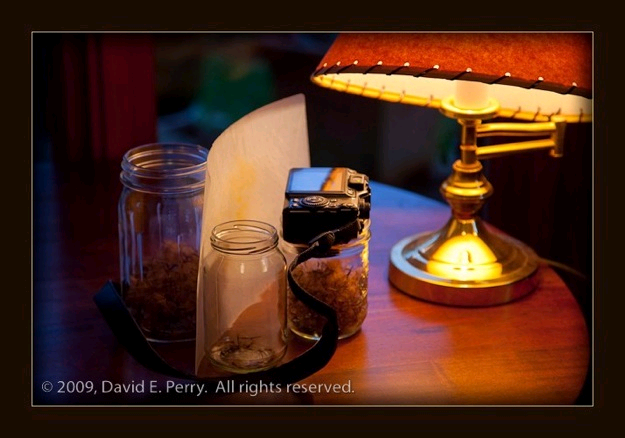
David Perry-a table lamp and small jar So here’s the dealio. This is a technique so simple, that anyone, even nervous types with coffee jitters, can get razor-sharp close ups of beautifully lit subjects without a tripod, and have a really good time doing it. Follow along with me for a minute while I show you what I mean. Then you can fire up your cameras, round up your repurposed jam, mayonnaise and peanut butter jars and start making a new kind of macro-photo magic.

What you’ll need:

1: A point and shoot camera with close-up capabilities or an SLR camera with a macro lens, or extension tubes. (Point-and-Shooters, look for the little flower symbol on a button or dial on the top of or back of your camera, and press it to turn on the close-up feature. Many little digital cameras will focus down as close as a half inch from the subject.)

2: A Mason jar, a peanut butter jar, a mayonnaise jar, a jam jar, a pickle jar . . . or all of the aforementioned.

David Perry-a side view of table lamp and jar

3: A willingness to play both with the subject you put in the jar, but also with the direction, quality and hue of the light pouring into the jar.

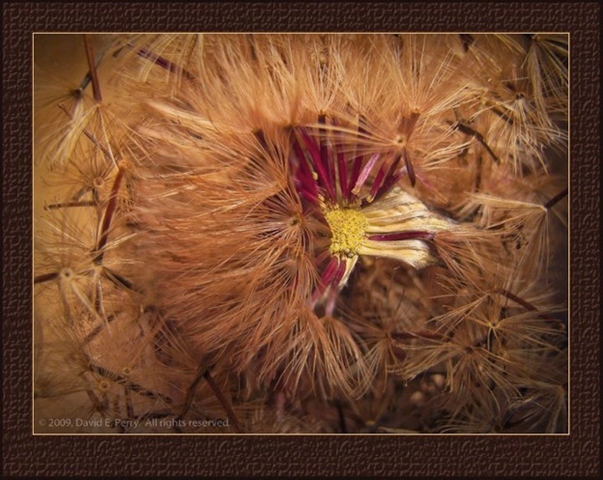
And here (below), are some of the exquisitely simple types of shots that you can get by shooting straight down into jars just like these. These are great practice type shots to help you get warmed up, but I’d encourage you, once you’ve got the hang of making shots like these, to try to shoot even more complex shots visually. Pictures with mystery and story.

David Perry-shot made from table and lamp set up

Now, for a quick primer on technique:

Once you’ve made any desired adjustments and framed up your shot, press your camera body downward, onto the rim of the glass jar while you depress the shutter button. The rigidity of the glass will keep the camera precisely distant, relative to the subject during your exposure, meaning that your pictures should be extra crispy sharp.

You can also add a plastic cutting sheet (as I have below), or enlist the white envelope that that latest piece of junk mail came in to serve as a reflector, softening the shadows by placing it either behind or beside the Mason jar to bounce light back into the image from another angle. Or, if you decide you need to diffuse the light from your table lamp or the window to soften the shadows, place the diffuse cutting board between the light source and the jar. You’ll be able to see the effects right away in the screen.

DavidPerry-quick primer on technique

I’d also encourage you to try to create and use “weird” light. Try shining a lamp through another jar filled with ice tea, or ice cubes and water and lemon slices right next to your shooting jar. Or bounce light off of a makeup mirror and into your shooting jar, or spritz the outside of your jar with a spray bottle, or use the want ads from the newspaper beneath the jar and wrapped around it. See how those elements can add background and shadows and other interest to the scene you’re shooting.

Notice the yellow plastic cutting board that I’m holding above the jar to color the light and give the scene an even warmer glow.

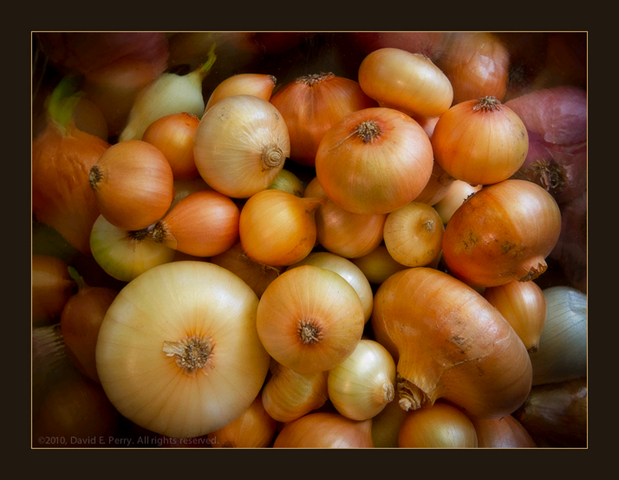
And here’s what the camera recorded. David Perry-onions-Micro In A Mason Jar

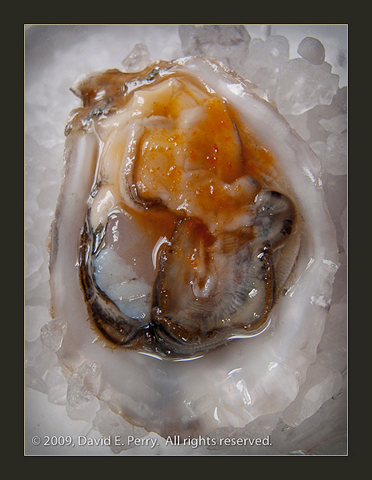
Here’s another example. An oyster on the half shell, a bit of hot sauce, and a bed of rock salt.

oyster on a hot shell-David Perry

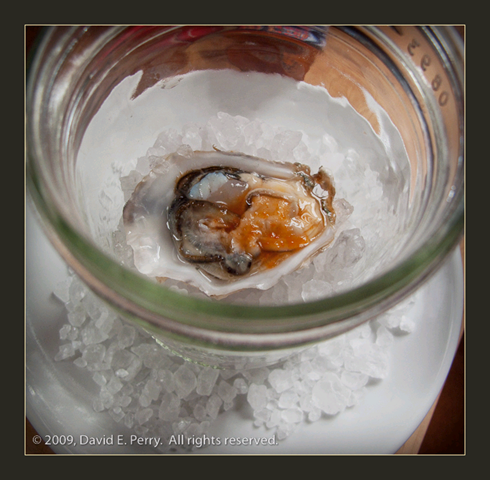
Backing away a bit, now you can see the simplicity of the setup I used to get the shot. Note the rock salt on the outside of the jar, as well, and that I set the shot up on a white plate to help give the entire shot that high key, icy look.

David Perry-oyster on a hot shell from a distance

So, this month, I’m asking you to think small and get in close . . . to show me some essential aspect of a subject that simply cannot be seen or appreciated from a distance. The point of this contest is to encourage you to look and see from new perspectives, to learn more about your camera’s amazing capabilities. For your entries I want to see pictures that take me into the depths of a subject and that leave me feeling that I’ve seen something in a completely new way. I want to see pictures that record the play of light and shadow, and texture, and that set the table for an intriguing story while looking downward into a glass jar.

Your pictures can be of nearly any subjects for this contest, but I really want photographs that allow me to see seeds, feathers, plants, flowers, insects or textures in ways that are fresh and unexpected. The images should be about seeing first and the subjects second. They need to evoke mood, and they should strive to elicit some sort of emotional, poetic, or “Wow!” response.

Here (below), I shot to the edge of the jar, instead of trying to avoid it. Note the dry grass outside the jar. After shooting this one, I made a mirror image of it in Photoshop, merged the two and then made a typographic wordplay on the “self-sealing” words that had been cast into the glass during the manufacturing process.

David Perry-edge of jar with raspberries

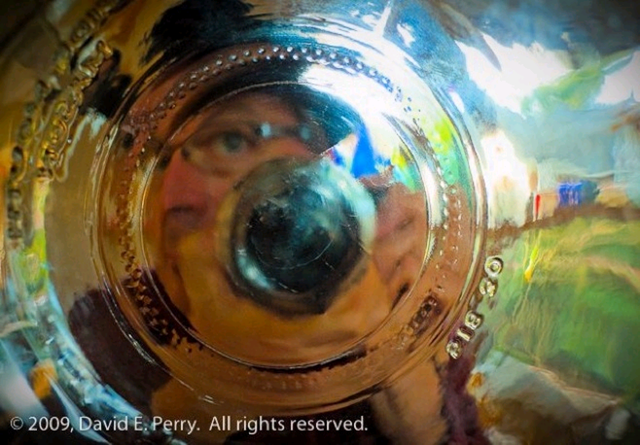
Consider shooting through the bottom of a jar and into a mirror for an unusual self-portrait.

David Perry-bottom of jar shooting through the mirror

?

?

?

?

?

?

?

?

?RULES FOR ENTERING THE CONTEST

1.? You must have an active blog in order to participate. To be eligible for judging, you need to leave us TWO links – a direct link to the image, and a link to your blog post that includes the image – in a comment on this post.

2. Your photo must be able to be copied from your site. That makes it possible for us to collect all the entries in one place for easier judging.

3. The deadline for entries is 11:59 PM Eastern time on Monday, January 24, 2011.

Entries that meet the above rules will be added to a separate gallery page. If you enter but your photo does not appear in the gallery within 24 hours, please review your entry to make sure you followed the rules.

All photos courtesy of David Perry.

This entry passed through the Full-Text RSS service — if this is your content and you're reading it on someone else's site, please read our FAQ page at fivefilters.org/content-only/faq.php
Five Filters featured site: So, Why is Wikileaks a Good Thing Again?.


View the original article here

Is The Gap Shrinking Between Baseball’s Rich and Poor?

1.????? Teams That Made (and did not make) the Playoffs.? As we’ve already noted, the 2010 baseball season was a bad year for money.? ?Of the top ten revenue teams in baseball, only three (the Yankees, Phillies and Giants) made the playoffs.? A large number of rich and (usually) successful teams missed the post-season in 2010: the Red Sox, Angels and Cardinals were replaced in the playoffs by the lower revenue Rays, Rangers and Reds.? We’ve discussed it before: there’s substantial revenue to be earned in the post-season.? When only three of the top revenue teams make it to the post-season, that shifts revenue from baseball’s rich to baseball’s poor.
2.????? Financial Reverses At The Top.? When we say that 2010 was a bad baseball year for money, we’re not only thinking about results on the field.? The Red Sox saw their TV ratings drop, which probably hurt their bottom line.? The Mets, Dodgers and Cubs saw declines in home attendance, which certainly hurt their bottom line.

3.????? Success In The Mid-Market.? 2010 was a good year for teams in the middle tier of baseball revenue earners.?? The teams with the 16th, 17th, 22nd and 24th highest revenues (according to Forbes) – the Rockies, Rangers, Reds and Twins — enjoyed the 4th, 2nd, 3rd and 1st highest increases in home attendance.? Other mid-market teams enjoyed sustained success at the box office.? For example, the Milwaukee Brewers had a mediocre season on the field, but still managed to draw the 11th best home attendance in baseball – 2,500 more fans per home game than the New York Mets.

If you want to point to one reason why revenue sharing declined in 2010, point to the Minnesota Twins.? Just nine years ago, the Minnesota franchise was close to folding; the team is now one of the most successful in baseball, and not just on the field.? With the opening of new Target Field, the Twins enjoyed the highest increase in baseball attendance, up an average of more than 10,000 a game in 2010.? In fact, the Twins are in danger of being classified as a “rich” team!? Their 2010 attendance was 6th highest in baseball, and their 2010 end-of-season payroll was 10th highest in baseball – ahead of traditional powers like the Cardinals and just $7 million behind the big-market LA Dodgers.

So, 2010 was a down year financially for many big-market teams, and a relatively good year for baseball’s middle class.? But there’s no reason to think that we’re seeing a trend.? Sure, the Twins should continue to do well, but their financial fortunes should decline a bit as the excitement over their new stadium begins to wane.?? Sure, we should continue to see small market teams make it to the post-season, but big revenue teams like the Red Sox and Cardinals are likely to crowd out small-market teams like the Reds and Rays.? Moreover, big market teams like the Cubs and Mets cannot underachieve forever.? The Mets’ hiring of new GM Sandy Alderson may signal an end to the team’s recent stretch of mediocrity.? That might prove to be bad news for mid-market teams like the Braves.

In order to shrink the gap between baseball’s haves and have-nots, we’ll need more sustainable trends than the ones we saw in 2010.? For example, we’ll need continuing increases in centrally-shared revenues, such as those generated by Major League Baseball Advanced Media.? ?But more importantly, we’ll need to see improvements in the ability of baseball’s financial bottom-feeders to generate revenues.? Small-market teams like the Twins and Brewers are showing how this can be done.? Teams like the Rays, Royals, Pirates and Marlins need to follow suit.

No, the Pirates will never generate the kind of local revenues earned by the Yankees.? But if the Pirates could earn money like the Brewers, or the Rockies, or even the Reds, this would go some way to narrow the gap between baseball’s rich and poor – and would permit the gap to be narrowed more meaningfully by a reformed system of revenue sharing.

This entry passed through the Full-Text RSS service — if this is your content and you're reading it on someone else's site, please read our FAQ page at fivefilters.org/content-only/faq.php
Five Filters featured site: So, Why is Wikileaks a Good Thing Again?.


View the original article here

Friday, December 24, 2010

December Calendar Photos

Poinsettia nursery

Poinsettia - Euphorbia pulcherrima in commercial greenhouse,

December is now the most commonly requested calendar photo by my various publishers.? This is because many calendars now include 13 months, adding December of the year it is sold to the 12 months of the upcoming year.

So, for my posting here, I thought it might be fun to show the variety of photos I have used to illustrate December.?? There are some obvious choices such as Poinsettia but for a gardener’s calendar I want to go beyond the obvious, so I try to include images with some subtleties that might appeal to a discriminating gardener.

Poinsettia leaf bract

Poinsettia 'Monet Twilight'

For instance nearly all Poinsettias (Euphorbia pulcherrima) are grown in California, originating with Paul Ecke Ranch which gives me the opportunity to show a different sort of December photo – in? greenhouse.? And then there are all the Poinsettia cultivars !? Gardeners are at once fascinated and appalled by this, but there is no denying that the breeders are having fun with plant genetics.

Poinsettias are such a popular subject because they are so showy and red at a time of year when we do not expect much from our gardens.? I posted last year about Red and Green at Christmas, going into a bit of the garden origins? of red at Christmas.? I did not know then that the photo of Cornus kousa with red berries I had just photographed for the blog would be in a calendar so soon.

Red winter berries of Cornus kousa

Red winter berries of Cornus kousa

Toyon or Christmas Berry,Heteromeles arbutifolia

Toyon or Christmas Berry

Red berries can make for classic Christmas time photos, and in fact, our California native Toyon shrub (Heteromeles arbutifolia) is called Christmas berry.? The woods around me are usually full of berries this time of year, though this year I seem to see far more Madrone berries than Toyon. This shot, of the berries isolated against the dark intreior of the tree really makes the redness stand out.

Pyracantha berries are also quite showy and they continue to be until they shrivel in the spring.? Not many birds like them as I hear they make them drunk.? Hmmm – seems perfect for an avian holiday party.? I loved finding this virtually wild pyracantha in front of a grove of poplars wth yellow fall color.? Strong color is always a good consideration when planning a calendar submission.

Red Pyracantha berries in winter garden

Red Pyracantha berries in winter garden

The 2011 Inspired Flower and Garden calendar from True Image is one that has two December photos, and since the photos are all my own I got to pick which I wanted.? To go with the Cornus kousa photo earlier, I chose an unexpected companion, one without much bright color – Leucadendron salignum ‘Winter Red’.

Leucadendron salignum 'Winter Red'

Leucadendron salignum 'Winter Red'

Being a California photographer has many blessings but I am very aware that we are not typical of the rest of the gardening world.? Our Mediterranean climate and plant palette give new meaning to seasonality, especially in context of our mild rainy winters.? I am never really sure what to send a publisher when I am asked for winter photos and usually end up simply? hoping for a good location caption.

But calendar photos almost by definition scream out “You can’t do this at home”, and are for those who just want to dream. If you have been following my fellow Gardening Gone Wild cohort Debra Lee Baldwin’s previous and most clever post? “The 12 Days of Cactus”, you know we here are not expecting the rest of the gardening world to do what we can do in California.

California drought tolerant succulent garden with Golden barrel cactus

Southern California succulent garden in winter

Not only do I routinely include succulent photos for my December calendar submissions, I am increasingly comfortable showing grass gardens in our California winters.? One of my very favorites, taken from my book “The American Meadow Garden” is Dave Fross’ meadow at Native Son’s Nursery.? I stylized this particular version.

Dave's December Meadow

But we do have some more typical winter scenes here in Northern California, where it gets cold enough for good fall color and deciduous trees.? The fantastic gardens at Filoli provide inspiration for gardeners year around but unfortunately are closed in winter.? By the time the Ginkgo trees turn butter yellow in December most visitors never get to see it.

Ginkgo trees in fall color Filoli gardens

Ginkgo trees in fall color Filoli gardens

And Filoli’s amazing Camperdown Elms make wonderful photos.? This one was the favorite one at my October ‘Picture the Enduring Garden’ lecture at San Francisco Botanical Garden and I made a print for every one at the lecture.

Camperdown elm tree in winter - Filoli garden

Camperdown elm tree in winter - Filoli

Christmas wreath Swag with cinammon sticks

Swag with cinammon sticks

A classic motif for gardeners to express themselves in winter is with wreaths and swags to decorate windows and doors.? Several years ago I visited Colonial Williamsburg in December and was amazed at the diversity of these winter decorations all made from natural materials.

These wreaths show some of the classic materials we can find in winter gardens such as evergreens, pine cones, seed heads (aren’t the lotus pods exquisite?), and dried flowers.? But I found wonderful local materials in several wreaths using the likes of oyster shells, large dried leaves of tobacco, and pheasant feathers.

Christmas wreath Colonial Williamsburg

Christmas wreath Colonial Williamsburg

Holly leaves make great December photos since many gardeners look to evergreens for winter interest.? With red berries ?? So much the better for this simple but carefully composed image in my garden.? I wish we had snow to really make it feel like winter.? No, actually I am fine without any snow.

variegated holly with winter berries

Variegated holly with winter berries

I finish with this lovely spruce tree covered with red tassels.? I? have not yet used this in any published calendar.? But who know what the new year will bring ?

Wishing all of you good health, much happiness and the beauty of gardens to sustain us.

Red tassles on blue spruce tree at christmas

Red tassles on blue spruce

This entry passed through the Full-Text RSS service — if this is your content and you're reading it on someone else's site, please read our FAQ page at fivefilters.org/content-only/faq.php
Five Filters featured site: So, Why is Wikileaks a Good Thing Again?.


View the original article here

Abbamondi to the Padres; also, your resume sucks

Just getting around to this as it’s off our track, but since I pull for the Padres as my NL “home” team… On the face, it’s just a good hire by the Padres, getting another young, smart dude to help the organization. Now, there are many of us/you who either secretly or openly covet a GM’s job and think you could do Cashman’s job with your eyes closed. Well, have a gander at Abbamondi’s resume and see if you have what it takes to beat this guy to the next open GM spot:

Abbamondi came to the Cardinals from Major League Baseball’s labor relations department, serving there as a senior director of labor economics. While there he helped craft the current Collective Bargaining Agreement and devise baseball’s revenue-sharing policies. He came to the Cardinals highly regarded for his proficiency with baseball policy, contracts and arbitration. Abbamondi headed the Cardinals’ arbitration cases, and had roles in negotiating many of the contracts that arbitration-eligible players received before their hearings.

Abbamondi, 39, was also involved in budgeting, overseeing the medical staff and roster management for the Cardinals.

Before pursuing a career in baseball, Abbamondi served nine years in the U.S. Navy as a flight officer. He flew 40 combat missions over Iraq and was a two-time recipient of the Navy Air Medal.

This ain’t your oft-maligned, stat-geek, computer-totin’, never-seen-a-game-in-person guy. ?Don’t hate him because he’s 39. ?Hate him because he kicks serious ass.

Now get yours back to work, slacker. Vacation, schmacation.

This entry passed through the Full-Text RSS service — if this is your content and you're reading it on someone else's site, please read our FAQ page at fivefilters.org/content-only/faq.php
Five Filters featured site: So, Why is Wikileaks a Good Thing Again?.


View the original article here

Minor League Recap: Tampa Yankees

Tampa was strong all season and topped off their 2010 year with a sweep of Dunedin in the semi-finals before dispatching the Charlotte Stone Crabs in the finals.? While they played well as a team, there were a few players who were particularly instrumental in Tampa’s success.

Curtain Calls:
Dellin Betances (SP): In fourteen starts for Tampa, Betances went 8-1 with a 1.77 ERA (1.83 FIP).? As one of the Yankees biggest prospects, Betances dominated the opposition in the Florida State League.? He allowed just one homer and nineteen walks, while striking out 88.? He held hitters to a .169 average before getting called up to Trenton.

Corban Joseph (2B):Joseph had a great season in Tampa before getting promoted to Trenton late in the season.? Over 98 games, Joseph put together a line of .302/.378/.436/.814.? He drove in 52 RBIs, six homers and three triples.? As Joseph continues to improve, he still committed thirteen errors in the field.? He also struck out 74 times, while walking just 43.

Walter Ibarra (SS):Ibarra also had a good season for Tampa, hitting .301/.348/.370.718.? He has continued to play well during the offseason, where he is currently hitting .312 for Naranjeros de Hermosillo.

Graham Stoneburner (SP):Stoneburner has made a name for himself in his second year in professional baseball.? After being promoted to Tampa, the right-hander went 8-5 over 19 starts and 103 innings.? He put together an ERA of 2.53, giving up just four homers and 24 walks while striking out 93 batters.? Stoneburner held opposing hitters to just .214 average.? August was a great month for the young hurler, who went 3-0 with an ERA of 1.95 over five games.? While he makes it hard for hitters to get on base, he does seem to struggle once runners are on, with his ERA jumping from 0.30 to 5.70. ?It is 11.39 when runners were in scoring position.

Adam Warren (SP): Another second year pro, Warren pitched his way to a late season midseason call-up to Trenton.? He went 7-5 in fifteen starts for Tampa.? He had a 2.22 (2.72) ERA, allowed only two homers and seventeen walks, while striking out 67 hitters.

Pat Venditte (RP): While it has been widely accepted that Venditte was not considered much of a prospect, the switch pitching youngster continues to make noise as he works his way through the Yankees farm system.? He appeared in 41 games for Tampa this season, before getting called up to Trenton for a couple games.? He recorded six saves thanks to a 1.73 ERA (1.88 FIP).? Venditte allowed only seventeen runs, fourteen earned, and two homers.? He walked fourteen hitters and struck out 85 while holding opposing hitters to a .187 average.

Players to Watch:
Andrew Brackman (SP):The big righty from NC State has struggled with injuries during his minor league career, but looks to have gotten back on track this season.? His numbers were not particularly impressive in Tampa, but his 5.10 ERA did not show the full picture, as his FIP was 3.12.? He gave up five homers and nine walks while striking out 56.? Brackman earned a spot on Trenton’s roster for the second part of the season, where he appeared to step things up and put together some strong numbers.

Jack Rye (OF):Rye spent fifteen games in Trenton before ending up back with Tampa, where he put together some solid numbers.? He hit .274/.342/.413/.755 in Florida, stealing seven bases and only getting thrown out once.? Rye has done alright in Tampa, but he has done two short stints in Trenton (once in 2009 and once in 2010) and has struggled.

This entry passed through the Full-Text RSS service — if this is your content and you're reading it on someone else's site, please read our FAQ page at fivefilters.org/content-only/faq.php
Five Filters featured site: So, Why is Wikileaks a Good Thing Again?.


View the original article here

Leave it to flipflopflyin…

This is completely off topic, but in the 2010 draft the Yankees selected James (goes by Matt) Rice as their final pick. I am wondering if we signed him or if he went back to Western Kentucky. He went to the same high school as I did and I can't find anything about what happened after he was selected. Any info would be greatly appreciated. He is/was the starting catcher for Western Kentucky if that helps. Thanks.

This entry passed through the Full-Text RSS service — if this is your content and you're reading it on someone else's site, please read our FAQ page at fivefilters.org/content-only/faq.php
Five Filters featured site: So, Why is Wikileaks a Good Thing Again?.


View the original article here

Wednesday, December 22, 2010

Catching up with Matt Sosnick

IIATMS: Nolasco has been in the rumor mill for a while now and has reportedly been attracting a great deal of interest. Now, with his three year deal, he’ll be able to focus on remaining in FLA and less worrying about being traded. Was this deal more about security or more about Nolasco’s desire to remain in Florida, where clearly, there’s a bit of uncertainty about spending?

  • MS: Nolasco’s deal was about both. He is very comfortable in Florida and believes the organization is going in the right direction. He also understands that he was still under team control for two more years, so the deal provides a nice guarantee for a guy who had a bit of a freak injury at the end of the year and understands the value of a guarantee. The security, combined with the comfort and familiarity of south Florida made this deal work.

IIATMS: One of your most exciting players, Kyle Blanks (with me and my boys in the picture to the right), had a very rough 2010 with a slow start followed by Tommy John surgery. With the trade of Adrian Gonzalez to Boston, do you think Blanks will be asked to transition to first base and what are Kyle’s thoughts on this idea?

  • MS: Kyle is willing to do whatever he can to help the Padres compete. Obviously there is a comfort level with him at first base, but he handled himself well in LF and would be fine returning to the outfield. We expect him to develop into one of the game’s elite players.

IIATMS: What’s the latest on Willingham and Sanchez? Can we expect something before the calendar turns?

  • MS: Both players have interest in extensions, but these things take time.

IIATMS: More of a macro question… it has been quite the memorable offseason with Boston’s two huge acquisitions, Phillies’ surprise acquisition of Cliff Lee and the WhiteSox double dip of Dunn and Konerko. Detroit, too, has been aggressive while the Yanks have come up uncharactaristically empty. What takeaways do you have from the 2010 offseason?

  • MS: I think this off-season shows that the game is very healthy from a financial standpoint.

-

Thanks again to Matt Sosnick for taking the time to chat with us.?I remain eternally grateful for Matt’s contributions to this site via interviews with him and his clients. Behind the scenes, he’s been even better, unfailingly responding to requests for memorabilia for charitable fund-raising activities or just general counsel about this great game.

This entry passed through the Full-Text RSS service — if this is your content and you're reading it on someone else's site, please read our FAQ page at fivefilters.org/content-only/faq.php
Five Filters featured site: So, Why is Wikileaks a Good Thing Again?.


View the original article here

Montero and Nunez for Greinke: Would you have done it?

OK, armchair GM’s and dimestore psychologists…time to speak up. First, here’s Jon Heyman’s tweet:

#royals sought montero & nunez from #yankees for greinke, who told kc he’d go. but yanks werent convinced ny was right for kid

The Yanks apparently had a shot at getting Greinke but didn’t have any confidence that it’d be the right spot for him.

Would you have pulled the trigger? Why or why not?

This entry passed through the Full-Text RSS service — if this is your content and you're reading it on someone else's site, please read our FAQ page at fivefilters.org/content-only/faq.php
Five Filters featured site: So, Why is Wikileaks a Good Thing Again?.


View the original article here

Voting For the Hall of Fame Class of 2011

Jeff Bagwell: Bagwell is the poster child for why Hall voters need to do research before they vote rather than simply relying on memory. Never fully appreciated when he was playing, and sort of lost in the shuffle of the steroid era, Bagwell is nevertheless one of the best first baseman in history. Bagwell hit .297/.408/.540 (a .406 wOBA) for his career with 449 home runs and 202 stolen bases. He also posted nine seasons with an fWAR of 5 or better, including seven with a 6 or better, five of 7 or better, and two above 8. This is a no doubter, but I predict he won’t make it.

Barry Larkin: This is one I’m a little afraid I’m homering out on (I grew up in the Cincinnati area when Larkin was at his peak), but all the same I think Larkin belongs in the Hall. He has a better career OPS and wOBA than Cal Ripken Jr., and was a much better hitter than Ozzie Smith, who overshadowed him in the National League. The real problem with Larkin is the matter of his ack of durability, as he only managed to play in at least 150 games in a season four times, and played just 2,180total games in his career. Still, I think he was probably good enough to merit a vote, though it’s borderline.

Edgar Martinez: When the only argument you can make against a guy is that the position he played should disqualify him from consideration, then you don’t have much of a case at all. Another no-brainer who will probably have to wait a while.

Tim Raines: If Raines didn’t have the misfortune of playing at the same time as Rickey Henderson, I don’t think this would be in doubt. A .294/.385/.425 hitter who stole 808 bases and scored 1,571 runs, I’m honestly a little surprised Raines hasn’t been voted in already. The BBWAA usually love those kind of counting stats.

Mark McGwire: And now, I guess, is where we get controversial. For reasons I may be inclined to elaborate on later, I don’t believe in retroactively “punishing” people who did use or may have used PED’s. Like, at all. So, to me, that means not even considering the issue when evaluating someone’s Hall of Fame case. And taking steroids out of the equation, McGwire is a Hall of Famer without question.

Rafael Palmiero: See above.

So there you have my ballot, commence with telling me how wrong I am. And feel free to post your own, you might even change my mind on a few people.

This entry passed through the Full-Text RSS service — if this is your content and you're reading it on someone else's site, please read our FAQ page at fivefilters.org/content-only/faq.php
Five Filters featured site: So, Why is Wikileaks a Good Thing Again?.


View the original article here

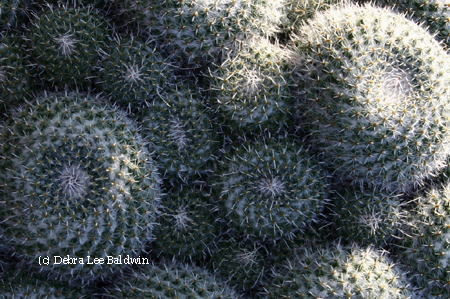
The Twelve Days of Cactus

Feel free to hum along.

On the first day of cactus, my true love gave to me:

A dove in a prickly pear tree.

On the second day of cactus, my true love gave to me:

Two agave pups and a dove in a prickly pear tree.

On the third day of cactus, my true love gave to me:

Three hens-and-chicks, two agave pups and a dove in a prickly pear tree.

On the fourth day of cactus, my true love gave to me:

Four claret cups, three hens-and-chicks, two agave pups and a dove in a prickly pear tree.

On the fifth day of cactus, my true love gave to me:

Five golden barrels, four claret cups, three hens-and-chicks, two agave pups and a dove in a prickly pear tree.

On the sixth day of cactus, my true love gave to me:

Six obesas blooming, five golden barrels, four claret cups, three hens-and-chicks, two agave pups and a dove in a prickly pear tree.

On the seventh day of cactus, my true love gave to me:

Seven saguaros spinning, six obesas blooming, five golden barrels, four claret cups, three hens-and-chicks, two agave pups and a dove in a prickly pear tree.

On the eighth day of cactus, my true love gave to me:

Eight mams a-milking, seven saguaros spinning, six obesas blooming, five golden barrels, four claret cups, three hens-and-chicks, two agave pups and a dove in a prickly pear tree.

On the ninth day of cactus, my true love gave to me:

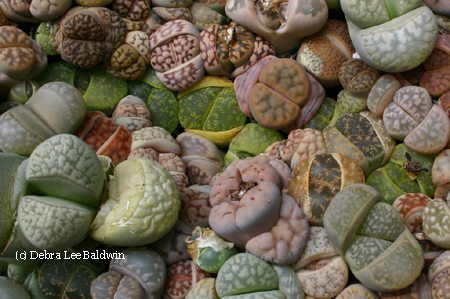
Nine lithops dancing, eight mams a-milking, seven saguaros spinning, six obesas blooming, five golden barrels, four claret cups, three hens-and-chicks, two agave pups and a dove in a prickly pear tree.

On the tenth day of cactus, my true love gave to me:

Ten chollas jumping, nine lithops dancing, eight mams a-milking, seven saguaros spinning, six obesas blooming, five golden barrels, four claret cups, three hens-and-chicks, two agave pups and a dove in a prickly pear tree.

On the eleventh day of cactus, my true love gave to me:

Eleven trips to Tucson, ten chollas jumping, nine lithops dancing, eight mams a-milking, seven saguaros spinning, six obesas blooming, five golden barrels, four claret cups, three hens-and-chicks, two agave pups and a dove in a prickly pear tree.

On the twelfth day of cactus, my true love gave to me:

Twelve ‘Sunburst’ drumming,?eleven trips to Tucson, ten chollas jumping, nine lithops dancing, eight mams a-milking, seven saguaros spinning, six obesas blooming, five golden barrels, four claret cups, three hens-and-chicks, two agave pups and a dove in a prickly pear tree.

Happy AloeDays, one and all! — Debra

This entry passed through the Full-Text RSS service — if this is your content and you're reading it on someone else's site, please read our FAQ page at fivefilters.org/content-only/faq.php
Five Filters featured site: So, Why is Wikileaks a Good Thing Again?.


View the original article here

Monday, December 20, 2010

Thinking Prospects: The Draft

A grand total of five teams spent more than 10% of their total payroll (information from here) on the draft (information found here). Now, I won’t argue that teams need to spend 10% of their player budget on the draft, but for the price of one over-priced reliever that no one needs but everyone signs, each team could take some more risks on guys who slip down due to bonus demands, sign them, and still have money left to make a significant splash in Latin America (which I’ve left out but will address in a future post). It makes no sense to spend so much money on a reliever (or any other free-agent teams throw money at—Jeff Francoeur, Melky Cabrera, etc.) who won’t even account for one win of production and not spend 20% of that on a draft prospect that could bring much more. I’ll admit the Yankees are awfully low on this list partially due to their ginormous payroll, but I’d also argue they don’t leverage the draft nearly enough. If they can afford to overpay for certain free-agents, why not throw a few million at guys like Austin Wilson?

College or High School?

We’ve moved on to the “best available player” argument. Honestly, no team’s draft board will look like another team’s, and they all have different opinions of certain players. That’s fine, but the questions is how you want your team to look at players. One of the more common debates in that discussion is to go college-heavy or high school-heavy. In favor of college players, they are better-trained, have played against better competition, and can be pushed through the system faster. In favor of high school players, they are younger, have more room for growth and projection, and have not been potentially abused by their college coaches (see most college pitchers). All in all, I would favor high school players. I’m a slight control freak, and I don’t like college coaches messing with my labor force, abusing them, and teaching them bad habits. I want the player as soon as possible. However, I would never simply skip a college player. Especially in the first 4-5 rounds, I’ll take the college player if he’s the clear best guy left because there’s something to be said for polish, experience, and quality of competition. Though after those rounds, I probably wouldn’t touch a college guy unless there were extreme circumstances because, if a guy has lasted that long out of college, he’s probably not that good. For rounds 4-5, I wouldn’t try to favor one over the other, but after that, it would probably be all high schoolers (it’s important to note that there will be drafts in which you don’t stick to your “plan”. For example, I like high school players, but there may be a draft in which I take 4 college players to begin the draft. That’s okay. You have to be flexible, and there will be years in which it doesn’t make sense to stick to that. Just always stick to the “best available player” ideology first)

Pitcher or Position Player?

Another big question, do you take the pitcher, knowing there’s a good chance he’ll get hurt, or take the position player, knowing that pitching is pricey? I would favor pitching. Pitching is not only pricy, but they get hurt a lot. My theory is to grab a lot of pitching, and after all the attrition (both injury-related and just from being a prospect), I’ll still have enough pitching to keep costs low. If pitching is inherently risky, I don’t want to invest a lot in free-agents who are also likely to get hurt—$15 million a year is a lot more than $2-3 million on a great prospect. However, I wouldn’t completely ignore position players. You just can’t. If a position player is highest on my board, I’ll take him, especially early, but if it’s close, I’m going with the pitcher. Late in the draft, I’d probably go pitching-heavy as well—grab anyone who can throw 95+ and stick ‘em in the ‘pen. I might also keep my park in mind as well. If I have a big ballpark, it’ll help any pitcher, and I might be more inclined to go after big hitters, though not much more.

Pitcher: Stuff or Command?

Once you’ve settled on pitchers, do you want a lot of hard throwers, knowing their more likely to miss bats, or do you want guys who have good command, knowing they might be more likely to make the majors? When considering this, I would keep my ballpark in mind. If I have a big ballpark and a good defense, I might be more inclined to take command/control guys who keep guys off-balance, knowing that my ballpark and defense can make their stuff play up (essentially the Twins’ strategy), but if I’m in a small ballpark and/or have a bad defense, I might go for strikeout guys to keep the ball in the park and avoid my defense. In a neutral park? I’ll always go stuff and hope repetition will improve their command. I figure that’s more likely to improve than a guy’s radar reading.

Position Player: Offense or Defense?

Once you’ve settled on position players, do you want to take guys who can hit but are not the best defenders or really good defenders that may not hit enough? Because I don’t think pitching, hitting, and defense all account for 33.333% of the game, I would imagine hitting is more valuable than defense, though defense remains important. If the guy can’t play defense at all, I probably wouldn’t touch him, but if he’s likely to be -5 runs with the glove but awesome with the stick, I’ll favor the stick. I may never have the best fielding team, but I’m willing to gamble that my team would hit enough for it not to matter much.

Right or Left-Handed?

Regardless of whether you want a hitter or pitcher, this is another big question, but I’m not sure it should be. For hitters, I imagine it’s probably better to be a left-handed hitter because of the amount of right-handed pitching, and it doesn’t hurt that your batter’s box is closer to first. For pitchers though, I’m not really sure. It might be better to be right-handed because of the amount of right-handed hitters, but people like to have lefties. And the one thing I really don’t get is that lefties are held to different standards. Why is “plus velocity” higher for righties than lefties? I realize that there are fewer lefties, and therefore, the chances of finding a lefty who throws 93-94 is less than finding a righty. But why does that matter? Does it appear different to the hitter? Does a 93 mph fastball appear faster from a lefty? Or do we just want lefties because all baseball players have less experience hitting against them? Add in the fact that you don’t know who attrition will take, and it seems pointless to gamble on what hand they are. I don’t know that I would even consider this when it comes to prospects, though it may come into play more when considering major-league acquisitions.

Upside or Polish?

A saying goes, “You win with stars,” and I agree. I prefer the guys with big tools, understanding that they might be riskier, for the small chance that they’ll become superstars. Having mid-rotation guys or decent regulars is nice, but prospects have a hard enough time of making it to the majors that they don’t need a lower ceiling to fall from. Give me the guy with huge potential, let me have him after high school, and let’s see if my player development people and coaches can’t get something out of him. That being said, taking a guy or two with some polish might help balance out the draft a little.

———————————————————————————————-

Honestly, this is how I think teams misuse free-agency. Teams think they are supposed to find their cornerstones there. No! Your superstars should come from the draft. Sure, a CC Sabathia comes along every now and then, but he’s a rarity and no one knows how that contract will ultimately worked out, though it’s been excellent so far. Spend a little extra money (like $4-5 million) on getting good prospects, don’t spend $4-5 million on the aging guy, and have a lot of inside information on whether or not to keep the superstar you’ve developed. Free-agency’s purpose (should be, though it’s not the intended goal) is to plug holes where your farm system has failed to develop a decent option. It’s not a panacea. It’s a dirty band-aid on a deep wound—use it only when there is no other option and get rid of it at the earliest opportunity. And yes, this goes for the Yankees, though the degree to which they need to adhere to this philosophy is different. Yes, they can afford to take risks in free-agency, and they prefer the certainty of established players. But there’s no reason not to throw your economic weight around in an area in which you could gain more of an economic and talent advantage.

Anyway, I’m sure you have some thoughts on how you would run the draft. You can either talk from your perspective or from the Yankees’ perspective, bu let’s hear it.

This entry passed through the Full-Text RSS service — if this is your content and you're reading it on someone else's site, please read our FAQ page at fivefilters.org/content-only/faq.php
Five Filters featured site: So, Why is Wikileaks a Good Thing Again?.


View the original article here